Author name: Admin

Diabetic Foot: Why a Vascular Surgeon is Your Feet’s Best Friend

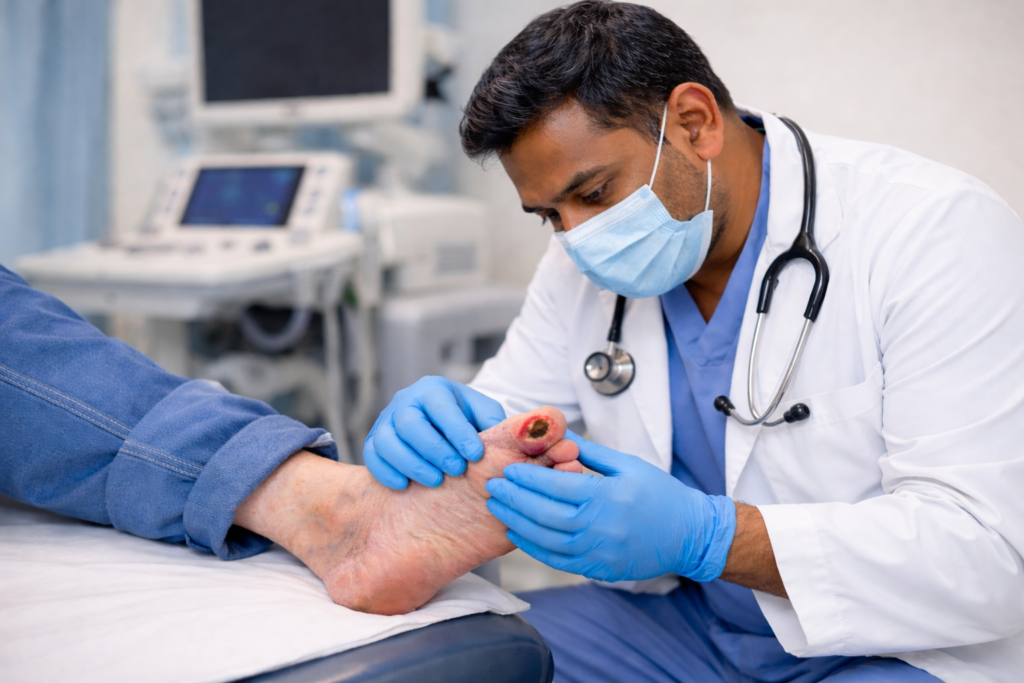
Diabetic Foot: Why a Vascular Surgeon is Your Feet’s Best Friend If you have diabetes, you’ve likely been told to check your feet every day. But if a complication arises—like a wound that won’t heal, a change in skin color, or a persistent ache—you might wonder who the right specialist is. While podiatrists and wound care experts are vital, the Vascular Surgeon plays a unique and critical role in saving the diabetic foot. Here is why a vascular specialist is the “anchor” of your foot health team. It’s All About the “Fuel Lines” Diabetes is a disease that affects the blood vessels. Over time, high blood sugar can cause the arteries in your legs to narrow or clog—a condition called Peripheral Artery Disease (PAD). Think of your arteries as the “fuel lines” carrying oxygen and nutrients to your feet. If those lines are blocked, your skin cannot repair itself, and your immune system cannot reach a wound to fight off infection. A vascular surgeon is the only specialist trained to physically reopen those fuel lines using advanced techniques like: Angioplasty and Stenting: Using tiny balloons to widen narrowed arteries from the inside. Bypass Surgery: Creating a new path for blood to flow around a blockage. Preventing the “Silent” Threat Many diabetic patients suffer from neuropathy (nerve damage), meaning they can’t feel a pebble in their shoe or a developing blister. Because you can’t feel the pain, a small nick can quickly turn into a deep ulcer. A vascular surgeon doesn’t just treat the wound; we evaluate the entire circulatory system. We use specialized tests to measure exactly how much oxygen is reaching your toes. By catching poor circulation early—even before a wound appears—we can prevent the tissue death that leads to amputation. The Goal: Limb Preservation The ultimate goal of a vascular surgeon is Limb Salvage. We look at the “big picture” of your health: Restoring Flow: Ensuring the foot has enough blood to heal. Infection Control: Working with other doctors to stop the spread of bacteria. Healing: Providing the vascular foundation that allows wound care treatments to actually work. When to See Us You should ask for a vascular evaluation if you have diabetes and notice: A sore or ulcer that hasn’t improved in two weeks. Your feet feel cold to the touch or look pale/blue. Pain in your calves while walking that goes away with rest. Rest pain (pain in your feet that keeps you up at night). Remember: In the world of diabetic foot care, “Time is Tissue.” Addressing circulation issues early is the most effective way to stay mobile and keep your feet healthy.  

Diabetic Foot: Why a Vascular Surgeon is Your Feet’s Best Friend Read More »
The Mystery of Non-Healing Wounds: When Your Body Needs a Helping Hand

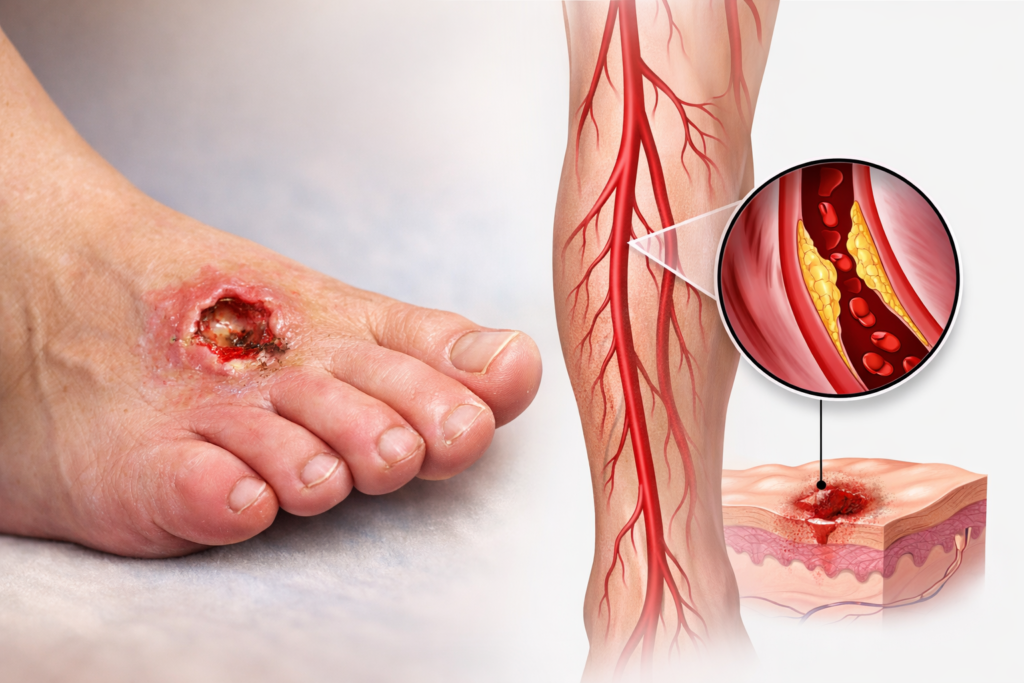
The Mystery of Non-Healing Wounds: When Your Body Needs a Helping Hand Imagine you get a cut, and usually, your body’s amazing healing powers kick in. But what if a wound on your leg or foot just won’t heal? It stays open, gets bigger, or keeps coming back. This is a common and frustrating problem, and often, the hidden culprit lies in your blood vessels. As a vascular surgeon, I often see patients whose “non-healing wounds” are actually a cry for help from their circulation. Why Won’t It Heal? The Root Cause For any wound to heal, it needs a constant supply of oxygen and nutrients carried by your blood. Think of blood as the “repair crew” that brings all the building materials to fix a damaged house. If the roads to that house are blocked or damaged, the crew can’t get there, and the repairs never finish.Here are the most common reasons why wounds on your limbs don’t heal:  1.        Blocked Arteries (Arterial Ulcers): This is the biggest reason. If you have Peripheral Artery Disease (PAD), the arteries carrying        fresh, oxygen-rich blood to your feet and legs are narrowed or blocked. Without this vital supply, the wound simply starves and        cannot close.  2.      Damaged Veins (Venous Ulcers): Sometimes, the problem isn’t getting blood to the wound, but getting it away. If the valves in        your leg veins are damaged (like in severe varicose veins), blood pools in the lower legs. This creates swelling and pressure,              making it hard for wounds to heal and often leading to a brownish discoloration of the skin.  3.      Diabetes: High blood sugar levels over time can damage both small blood vessels and nerves. Poor circulation (like PAD) makes      healing difficult, and nerve damage means you might not even feel a small cut or blister until it becomes a large, infected wound. How a Vascular Surgeon Can Help When a wound isn’t healing, it’s a signal that your circulatory system needs attention. Here’s what we offer: Diagnosis: First, we do a thorough check to see why the wound isn’t healing. We use special tests to measure blood flow in your arteries and veins, looking for blockages or poor circulation. Re-opening Blocked Arteries: If we find a blockage, we can often “re-open the pipes” using minimally invasive techniques like angioplasty and stenting. This restores crucial blood flow directly to the wound, giving it the oxygen and nutrients it needs to finally close. Fixing Leaky Veins: For venous ulcers, we can use procedures to close off damaged veins, reducing swelling and allowing healthy circulation to return, which promotes healing. Specialized Wound Care: Beyond fixing the circulation, we are also wound care specialists. We ensure the wound itself is clean, properly dressed, and protected, creating the best environment for healing once blood flow is restored.     Don’t ignore a wound that won’t heal. It’s not just a surface problem; it could be a warning sign from your deeper circulatory system.        Early intervention can make all the difference in saving your limb and improving your quality of life.  

The Mystery of Non-Healing Wounds: When Your Body Needs a Helping Hand Read More »

Dry vs. Wet Gangrene: A “Limb vs. Life” Comparison

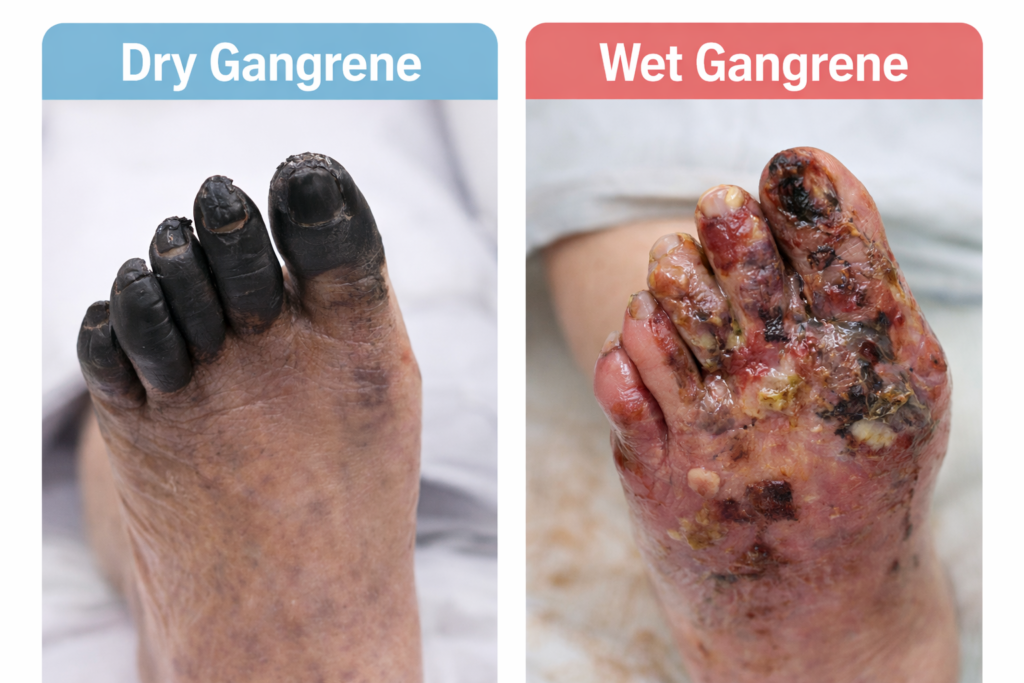
Dry vs. Wet Gangrene: A ” Limb Vs. Life” Comparison   If you or a loved one are facing gangrene, it is important to understand that there are two very different types. Both are serious and require immediate hospital care, but the way we treat them depends on whether we are fighting starvation or infection.To understand the difference, think of the difference between a shriveled raisin and a rotting grape. Dry Gangrene: The “Shriveled Raisin” Dry gangrene is like a grape that has turned into a raisin. It has shriveled up because it was starved of water (in your case, blood). What is happening? The blood flow to your limb is completely blocked. The tissue is “starving” and eventually dies, turning dry and black. The Treatment Goal: Save the Limb.   The Plan: We must fix the “plumbing” first. We perform revascularization (opening the blocked pipes with stents or bypass) to bring blood back to the area. Once the blood is flowing again, we remove only the dead part (a “limited amputation”). If we cut before fixing the blood flow, the area simply won’t heal. Wet Gangrene: The “Rotting Grape” Wet gangrene is like a grape that has become soft, mushy, and rotten. This isn’t just a lack of blood; it is a serious bacterial infection What is happening? The dead tissue has become infected. This infection acts like a fire—it spreads rapidly and can enter your bloodstream, causing a life-threatening condition called sepsis. The Treatment Goal: Save the Life.   The Plan: We cannot wait to fix the blood flow because the infection is trying to kill the patient. We must perform an amputation first to remove the “septic focus” (the source of the rot). Once the “fire” is out and the patient is stable, we then address the underlying vascular issues.   Summary Checklist Feature Dry Gangrene (The Raisin) Feature Dry Gangrene (The Raisin) Wet Gangrene (The Rotting Grape) Main Problem Severe blockage (Starvation) Infection (Sepsis) Appearance Appearance Dry, black, shriveled Swollen, oozing, “boggy” First Priority Restore blood flow (Surgery) Remove infection (Amputation) Secondary Goal Save as much of the limb as possible Stabilize the patient’s life

Dry vs. Wet Gangrene: A “Limb vs. Life” Comparison Read More »

The Silent Clogger: How Atherosclerosis Affects You From Head to Toe

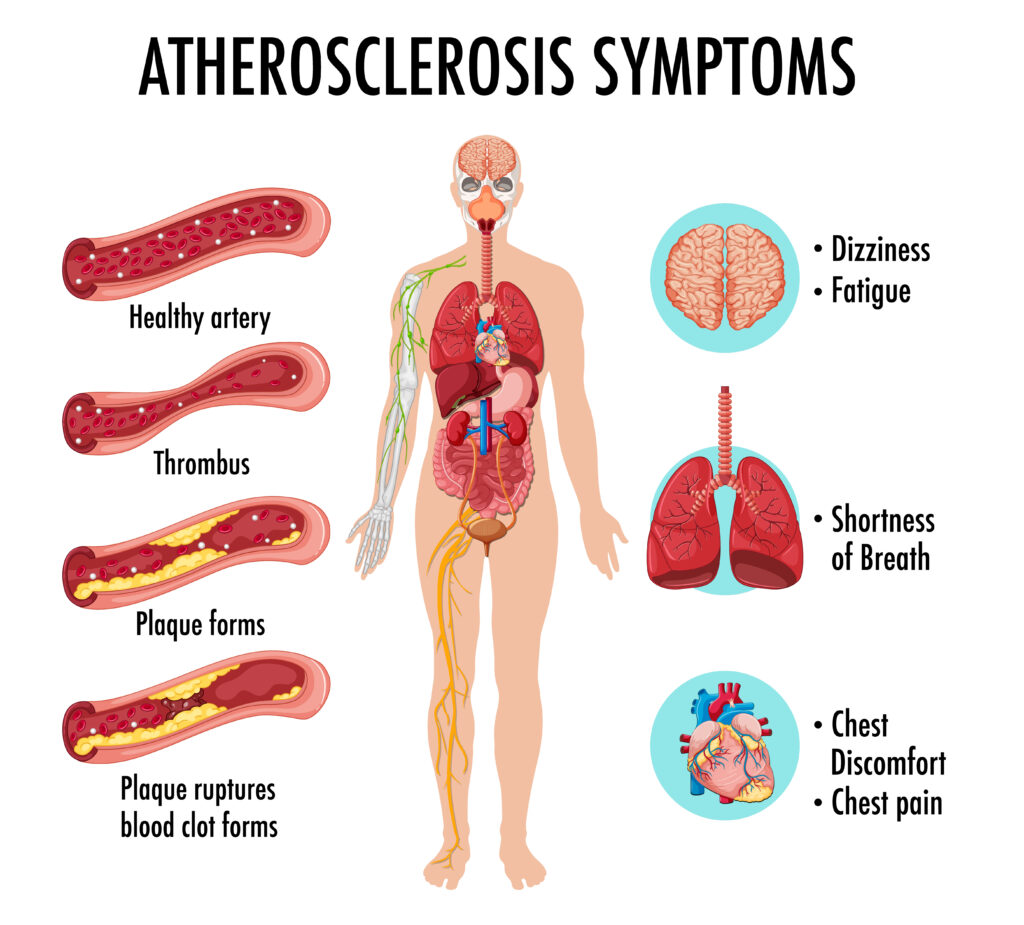
The Silent Clogger: How Atherosclerosis Affects You From Head to Toe Imagine your circulatory system as a vast, 100,000-mile network of highways. When you are young, these highways are smooth and clear. But over time, a process called Atherosclerosis—the buildup of fats, cholesterol, and waste (plaque) inside your artery walls—begins to narrow these lanes. Atherosclerosis isn’t just a “heart problem.” It is a systemic disease that affects every inch of your body, from your brain down to your toes. One Disease, Many Names Depending on which “highway” gets clogged, the consequences change, but the underlying cause remains the same: 1. In the Brain (Stroke): When plaque builds up in the carotid arteries of the neck or vessels in the brain, it can cut off oxygen. This leads to a stroke, which can affect speech, movement, and memory. 2. In the Heart (Heart Attack): If the coronary arteries become blocked, the heart muscle starves for blood, leading to chest pain (angina) or a heart attack. 3.In the Kidneys (Dialysis): When the arteries supplying the kidneys narrow, these vital organs can no longer filter waste from your blood. This is a leading cause of kidney failure and the eventual need for dialysis. 4. In the Legs (Gangrene): Known as Peripheral Artery Disease (PAD), blockages here cause pain while walking. If the blood flow stops completely, tissue dies, leading to gangrene and the risk of amputation. The “Perfect Storm”: Why Does It Happen? Atherosclerosis doesn’t happen overnight. It is fueled by a “perfect storm” of modern lifestyle factors: 1. Bad Eating Habits: Diets high in trans fats, processed sugars, and excessive salt act like “sludge” in your system, damaging the delicate lining of your arteries and making it easier for plaque to stick. 2. Cholesterol: High levels of LDL (the “bad” cholesterol) provide the raw material for plaque. Think of it as the debris that accumulates on the shoulder of the highway until it spills into the lanes. 3. Stress: Chronic stress keeps your body in a state of inflammation. This “biological friction” scars the inside of your arteries, creating rough patches where cholesterol can easily snag and build up. The Good News The most important thing to remember is that Atherosclerosis is manageable. As vascular surgeons, we specialize in clearing these blockages through advanced, minimally invasive techniques. However, the best “surgery” is the one you never need. By managing your cholesterol, finding healthy ways to handle stress, and choosing whole foods, you can keep your biological highways clear for a lifetime.

The Silent Clogger: How Atherosclerosis Affects You From Head to Toe Read More »

Peripheral angioplasty explained

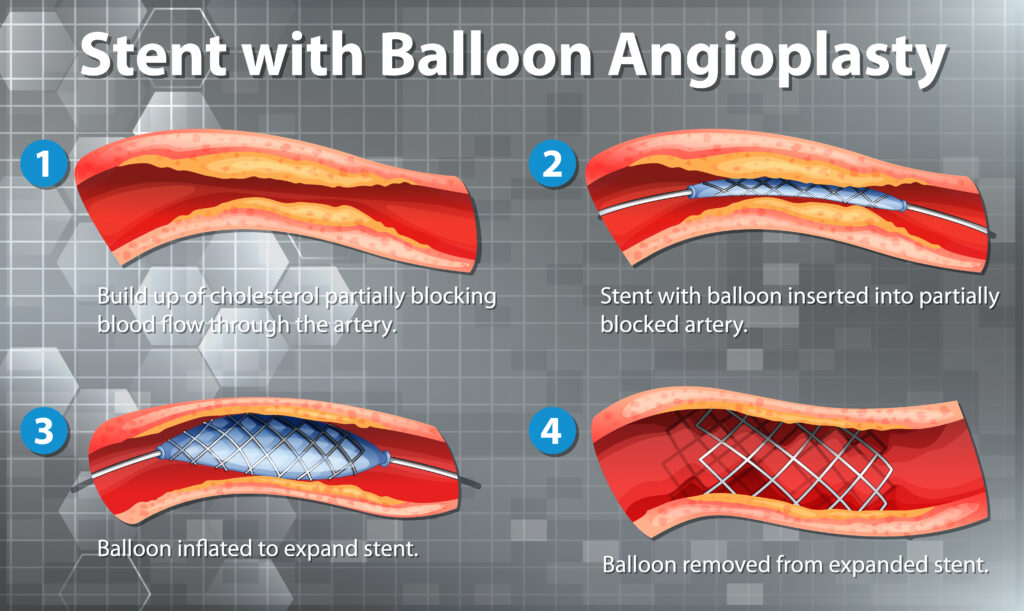
Peripheral angioplasty explained Think of a Peripheral Angioplasty and Stenting as a way to “re-open the pipes” in your legs without needing a major operation. When plaque (cholesterol and calcium) builds up in your arteries, it’s like a clogged drain—blood can’t get through, which causes pain or cramping when you walk. Here is how we fix it from the inside out: 1. The Entry Instead of a large incision, we make a tiny puncture, usually in the crease of your groin or at your wrist. We use a local numbing medicine, so you stay awake and comfortable throughout the process. 2. The Navigation Using a thin, flexible tube called a catheter and live X-ray images, we carefully navigate through your blood vessels until we reach the exact spot where the blockage is located. 3. The “Balloon” (Angioplasty) Once we reach the blockage:  We slide a tiny, deflated balloon into the narrowed area.  We gently inflate the balloon, which pushes the plaque against the artery walls.  This widens the “pipe” so blood can flow freely again. 4. The “Scaffold” (Stenting) In many cases, the artery needs a little extra support to stay open. We place a stent—a tiny, expandable mesh tube—at the site. The stent stays in your body permanently, acting like a scaffold to keep the artery wide and healthy.       1. What to Expect Afterward  The Procedure: Usually takes 45 to 90 minutes.  Recovery: You will rest in the hospital for a few hours. Most patients go home the next day.  The Result: Many patients feel an immediate improvement in the warmth and “heaviness” of their legs. You’ll be back to light walking within 24 hours.       2.Why It’s Done         This procedure is a “minimally invasive” alternative to bypass surgery. It has a much faster recovery time, less scarring, and                         effectively restores the circulation you need to stay active and pain-free.

Peripheral angioplasty explained Read More »

Evolution of Vascular Surgery

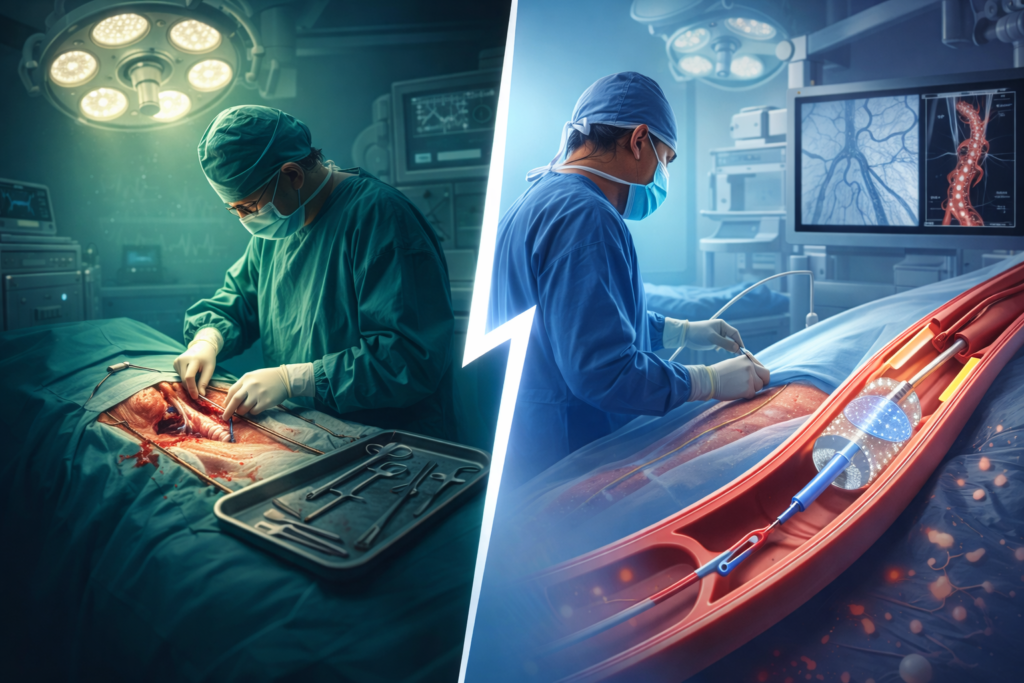
Evolution of Vascular Surgery The evolution of vascular surgery is a story of “the plumbing getting its own master plumber.” For decades, vascular surgery was tucked under the umbrella of General Surgery or Cardiothoracic Surgery. Today, it stands alone as a highly specialized field. Here is the 2-minute breakdown of how we got here.   1. The Early Days: “The Heart-First Era” In the mid-20th century, if you had a blood vessel problem, you saw a Cardiothoracic Surgeon. Because the heart is the “pump,” it was assumed the same surgeon should fix the “pipes” (the arteries and veins). Surgery back then was “Open” and “Heavy.” To fix an abdominal aneurysm or a blocked leg artery, surgeons had to make large incisions, often leading to long hospital stays and intense recovery periods. Vascular surgery was seen as an extension of the chest, not a specialty of its own. 2. The Great Pivot: The “Inside-Out” Revolution The 1990s changed everything with the birth of Endovascular Surgery. Instead of cutting the body open to reach a vessel, surgeons figured out they could enter the “pipe” from the inside using a tiny puncture (usually in the groin). They could then “navigate” through the body using wires and catheters to fix problems from within.  CT Surgeons stayed focused on the pump (the heart) and the lungs. *Vascular Surgeons mastered this new “minimally invasive” world of stents, balloons, and lasers. 3. Why the Split Happened As technology advanced, it became clear that the skills required to fix a heart valve are very different from the skills needed to save a diabetic foot from amputation or repair a carotid artery to prevent a stroke..  Specialization: Vascular surgeons became experts in Long-term Management. Unlike a heart bypass (which is often a “one-off” fix), vascular disease is a lifelong journey. Imaging Mastery: Modern vascular surgeons are part surgeon, part radiologist. They must be experts at reading complex 3D scans and operating under X-ray guidance. 4. Today: A Separate Identity By the early 2000s, vascular surgery officially became a distinct specialty with its own board certifications and training programs. Today, when you see a Vascular Surgeon, you aren’t seeing a “heart doctor who also does legs.” You are seeing a specialist who treats the entire 100,000-mile network of blood vessels in your body. We are the architects of blood flow, ensuring that every organ and limb gets the oxygen it needs to survive.

Evolution of Vascular Surgery Read More »

Scroll to Top