
Peripheral angioplasty explained
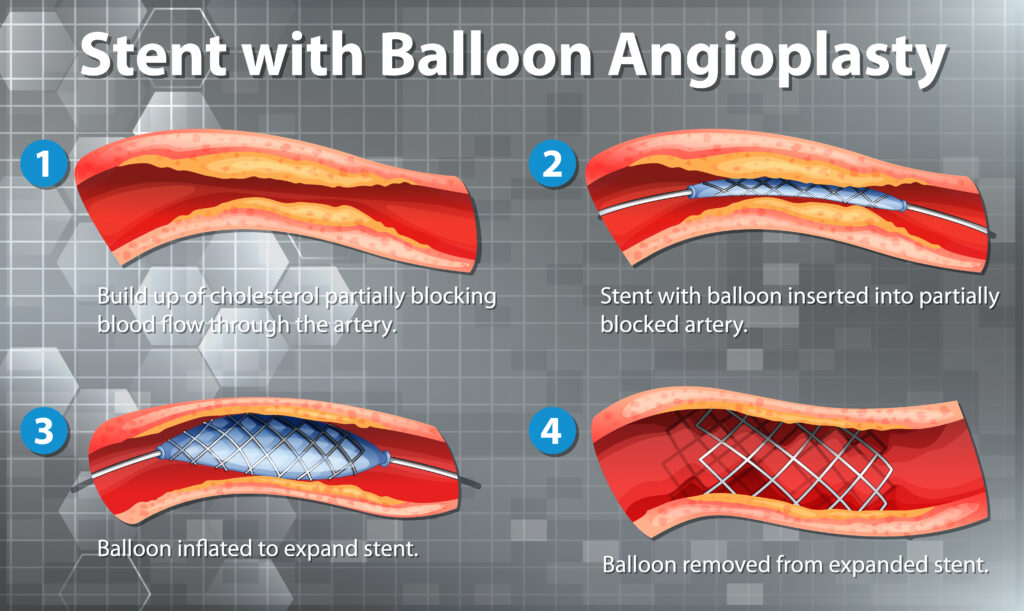
Think of a Peripheral Angioplasty and Stenting as a way to “re-open the pipes” in your legs without needing a major operation. When plaque (cholesterol and calcium) builds up in your arteries, it’s like a clogged drain—blood can’t get through, which causes pain or cramping when you walk.
Here is how we fix it from the inside out:
1. The Entry
Instead of a large incision, we make a tiny puncture, usually in the crease of your groin or at your wrist. We use a local numbing medicine, so you stay awake and comfortable throughout the process.
2. The Navigation
Using a thin, flexible tube called a catheter and live X-ray images, we carefully navigate through your blood vessels until we reach the exact spot where the blockage is located.
3. The "Balloon" (Angioplasty)
Once we reach the blockage:
- We slide a tiny, deflated balloon into the narrowed area.
- We gently inflate the balloon, which pushes the plaque against the artery walls.
- This widens the “pipe” so blood can flow freely again.
4. The "Scaffold" (Stenting)
In many cases, the artery needs a little extra support to stay open. We place a stent—a tiny, expandable mesh tube—at the site. The stent stays in your body permanently, acting like a scaffold to keep the artery wide and healthy.
1. What to Expect Afterward
- The Procedure: Usually takes 45 to 90 minutes.
- Recovery: You will rest in the hospital for a few hours. Most patients go home the next day.
- The Result: Many patients feel an immediate improvement in the warmth and “heaviness” of their legs. You’ll be back to light walking within 24 hours.