
The Silent Clogger: How Atherosclerosis Affects You From Head to Toe
Imagine your circulatory system as a vast, 100,000-mile network of highways. When you are young, these highways are smooth and clear. But over time, a process called Atherosclerosis—the buildup of fats, cholesterol, and waste (plaque) inside your artery walls—begins to narrow these lanes.
Atherosclerosis isn’t just a “heart problem.” It is a systemic disease that affects every inch of your body, from your brain down to your toes.
One Disease, Many Names
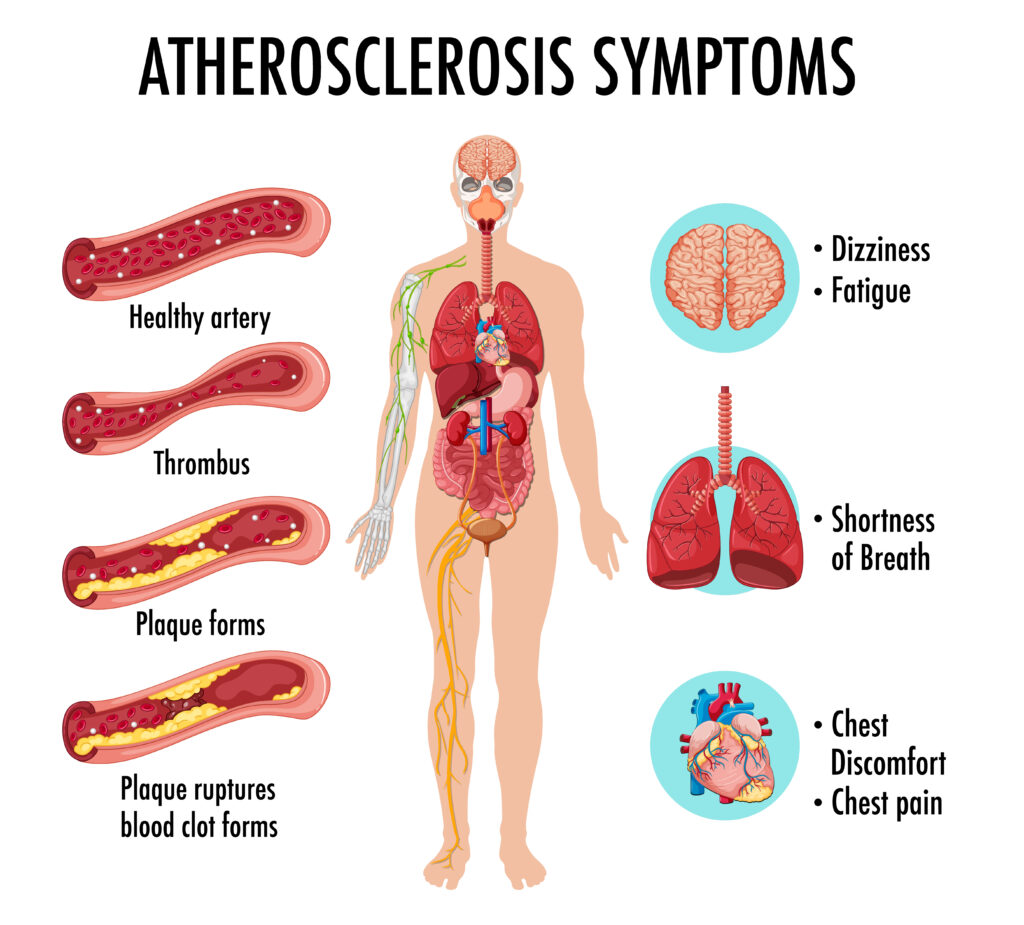
Depending on which “highway” gets clogged, the consequences change, but the underlying cause remains the same:
1. In the Brain (Stroke):
When plaque builds up in the carotid arteries of the neck or vessels in the brain, it can cut off oxygen. This leads to a stroke, which can affect speech, movement, and memory.
2. In the Heart (Heart Attack):
If the coronary arteries become blocked, the heart muscle starves for blood, leading to chest pain (angina) or a heart attack.
3.In the Kidneys (Dialysis):
When the arteries supplying the kidneys narrow, these vital organs can no longer filter waste from your blood. This is a leading cause of kidney failure and the eventual need for dialysis.
4. In the Legs (Gangrene):
Known as Peripheral Artery Disease (PAD), blockages here cause pain while walking. If the blood flow stops completely, tissue dies, leading to gangrene and the risk of amputation.
The "Perfect Storm": Why Does It Happen?
Atherosclerosis doesn’t happen overnight. It is fueled by a “perfect storm” of modern lifestyle factors:
1. Bad Eating Habits:
Diets high in trans fats, processed sugars, and excessive salt act like “sludge” in your system, damaging the delicate lining of your arteries and making it easier for plaque to stick.
2. Cholesterol:
High levels of LDL (the “bad” cholesterol) provide the raw material for plaque. Think of it as the debris that accumulates on the shoulder of the highway until it spills into the lanes.
3. Stress:
Chronic stress keeps your body in a state of inflammation. This “biological friction” scars the inside of your arteries, creating rough patches where cholesterol can easily snag and build up.
The Good News
The most important thing to remember is that Atherosclerosis is manageable. As vascular surgeons, we specialize in clearing these blockages through advanced, minimally invasive techniques. However, the best “surgery” is the one you never need. By managing your cholesterol, finding healthy ways to handle stress, and choosing whole foods, you can keep your biological highways clear for a lifetime.